

When Headlines Move Markets: What the Iran Ceasefire Really Means for Investors
Markets rarely wait for certainty. In the wake of a recently announced two-week ceasefire between the United States and Iran, financial markets reacted immediately. Oil prices dropped sharply. Stocks rebounded. For a moment, a period of heightened geopolitical tension appeared to ease.
But beneath the surface, the story is more nuanced and far more instructive for long-term investors.
At the center of the recent volatility is the Strait of Hormuz, one of the most critical chokepoints in the global energy system. Roughly 20 percent of the world’s oil supply passes through this narrow waterway. When access to it was disrupted, oil prices surged from around $70 per barrel to over $100 in a matter of days, at one point closing near $109. Following the ceasefire announcement and the prospect of reopening the strait, Brent crude fell back toward the $90 range in what marked the largest one-day percentage decline since March 2020.
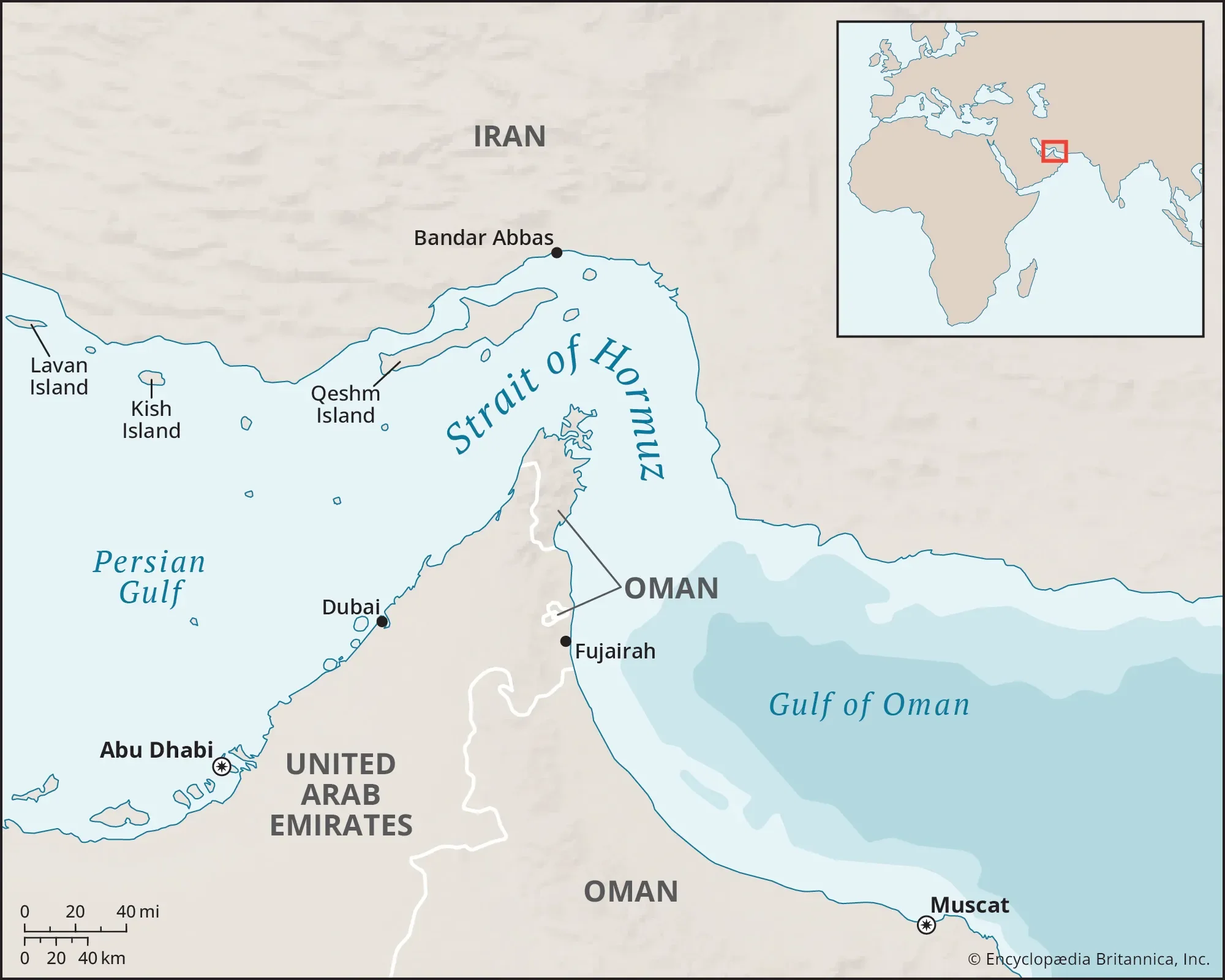
The Strait of Hormuz is approximately 90 to 104 miles long, connecting the Persian Gulf to the Gulf of Oman and the Arabian Sea. It is a critical narrow chokepoint, with a minimum width of only 21 to 30 miles, making it a crucial maritime route for roughly one-fifth of the world's daily oil consumption.
The ripple effects were immediate.
Gasoline prices across the United States climbed above $4 per gallon during the height of the disruption, raising renewed concerns about inflation. While still below the peaks seen during the Russia-Ukraine conflict, the increase represented a jump of more than $1 per gallon in roughly a month. With oil prices now easing, consumers may see some relief at the pump, though historically these adjustments tend to lag and remain sensitive to further geopolitical developments.
For households, the impact of energy prices extends well beyond the gas station. Fuel costs are embedded in transportation, manufacturing, and agriculture, meaning higher oil prices can push up the cost of goods and services across the economy. While many households can absorb temporary increases, these pressures often reduce discretionary income and savings rates, with lower-income households feeling the effects most acutely.
From a macroeconomic perspective, the implications are equally significant.
Energy remains a key component of inflation, and even short-term spikes can influence broader price trends. Recent projections from global organizations such as the OECD and IMF suggest that elevated energy costs could contribute to higher inflation and slower economic growth in 2026. As one IMF outlook noted, multiple pathways currently point toward a combination of rising prices and moderating growth.
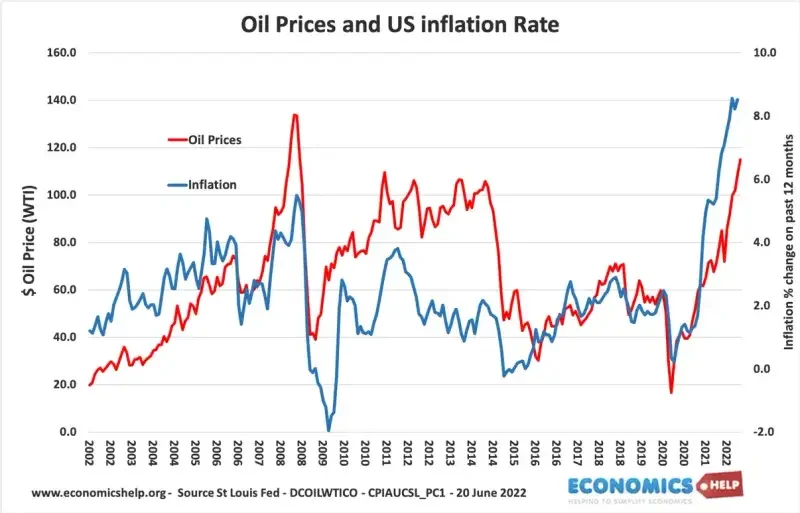
Source: Investing News Network. Chart/data adapted from “Oil Price and Inflation: What’s the Correlation?” This material is for informational and illustrative purposes only and does not constitute investment advice
This creates a difficult balancing act for the Federal Reserve.
In recent weeks, market expectations around interest rate policy have shifted in response to these developments. At one point, investors began pricing in a higher probability of rate hikes driven by inflation concerns. More recently, fed funds futures suggest the Fed may hold rates steady. These swings underscore how quickly geopolitical events can alter the economic outlook, complicating decisions for policymakers and businesses alike.
Meanwhile, the labor market has shown signs of softening.
The U.S. economy added 178,000 jobs in March, a rebound from a revised loss of 133,000 in February. Yet the broader trend tells a more subdued story. Over the past six months, job growth has averaged just 15,000 per month, a notably slow pace by historical standards. The unemployment rate edged down to 4.3 percent, though this was partly due to a decline in labor force participation, which fell to 61.9 percent, its lowest level since 2021. Approximately 400,000 workers exited the labor force during this period.
Wage growth has remained modest, with average hourly earnings rising 3.5 percent year over year. While this outpaces inflation on average, it reflects a cooling labor environment compared to recent years.
Taken together, these data points paint a picture of an economy navigating multiple crosscurrents: easing but still-present inflation pressures, a softening labor market, and ongoing geopolitical uncertainty.
And yet, markets have shown resilience.
Historically, geopolitical events such as conflicts in the Middle East, tensions with North Korea, and even major global wars have triggered short-term volatility without fundamentally derailing long-term market performance. What has mattered more consistently are the underlying drivers of growth, including corporate earnings, consumer spending, and monetary policy.
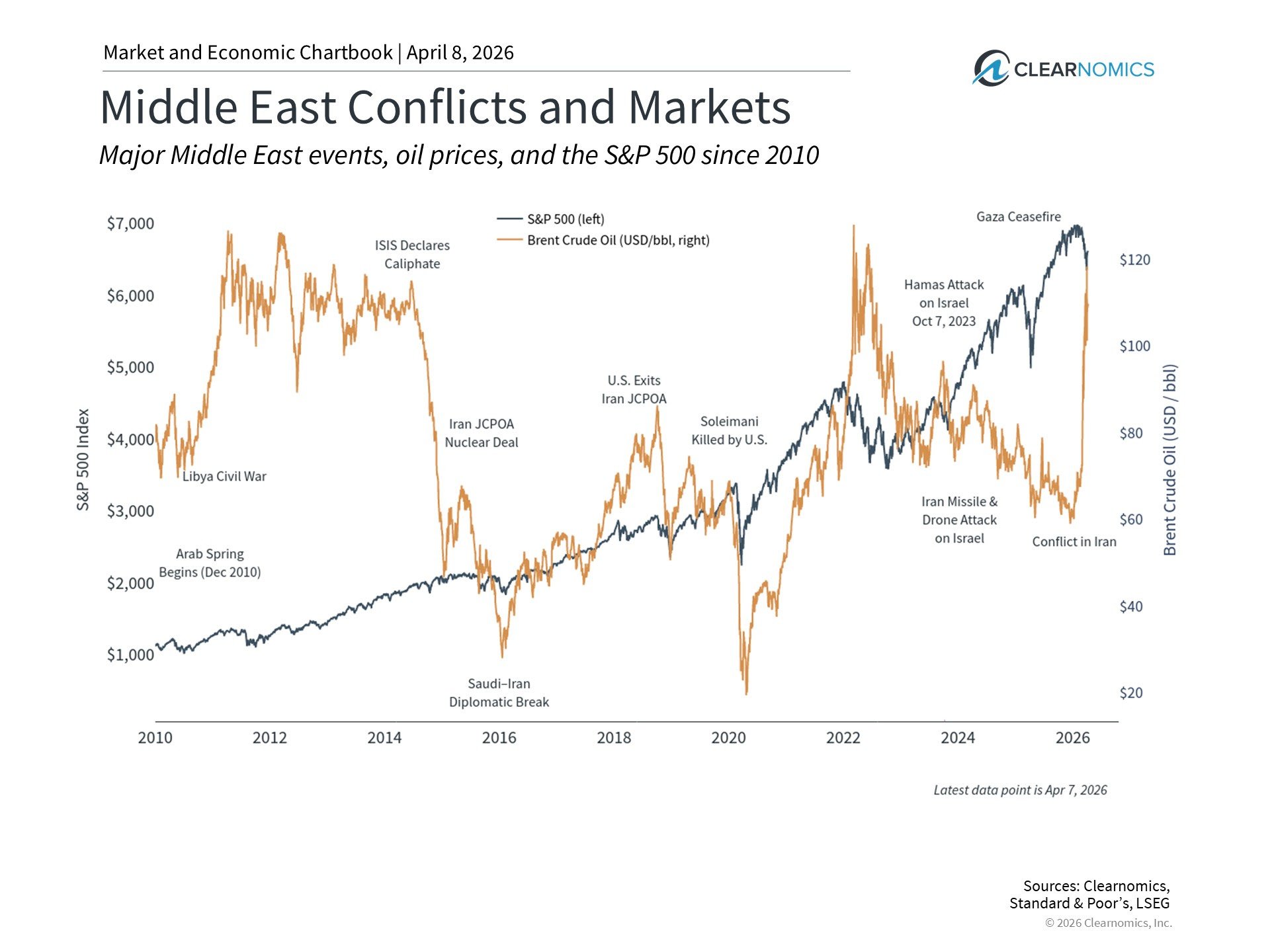
Source: Kitces.com (featuring Clearnomics). Chart/data provided for informational purposes only and does not constitute investment advice. Third-party data is believed to be reliable but not guaranteed.
That pattern appears to be holding.
Despite recent turbulence, consumer spending remains relatively healthy, and many businesses continue to report stable or expanding profits. These factors have helped support both equity and fixed income markets, even as headlines have shifted rapidly.
It is also important to recognize the nature of ceasefires themselves.
While they often provide immediate relief, they are not always permanent. Past agreements, including those involving Israel and Hamas or Russia and Ukraine, have at times been temporary or fragile. For investors, this reinforces the importance of avoiding overreaction, whether to positive developments or negative ones.
The discipline required during market downturns is the same discipline required during market rallies.
A well-constructed financial plan is designed with these moments in mind. It accounts for volatility, incorporates diversification, and aligns investment strategy with long-term goals rather than short-term headlines.
In environments like this, the temptation to act can be strong. Markets move. News cycles accelerate. Uncertainty feels immediate.
But for long-term investors, the more effective approach has historically been to stay grounded in the fundamentals.
At Elesie Retirement, that remains the focus. Not predicting the next geopolitical event, but helping clients build strategies that can endure through them, whether markets are reacting to conflict, recovery, or something entirely unexpected.
Want a fiduciary to help structure your retirement plan for market ups and downs? Contact us today.